
Our services
GPR Scanning
Ground penetrating radar (GPR) lets us see what metal-only locating can’t, including plastic and concrete pipe, tanks, and other buried features on private property. Family-owned and based in Indianapolis, we serve Indiana, Ohio, Michigan, Kentucky, and the greater Midwest.
Family-owned
MALA and Noggin GPR
Flat-rate quotes
Scheduled by appointment
What GPR scanning is
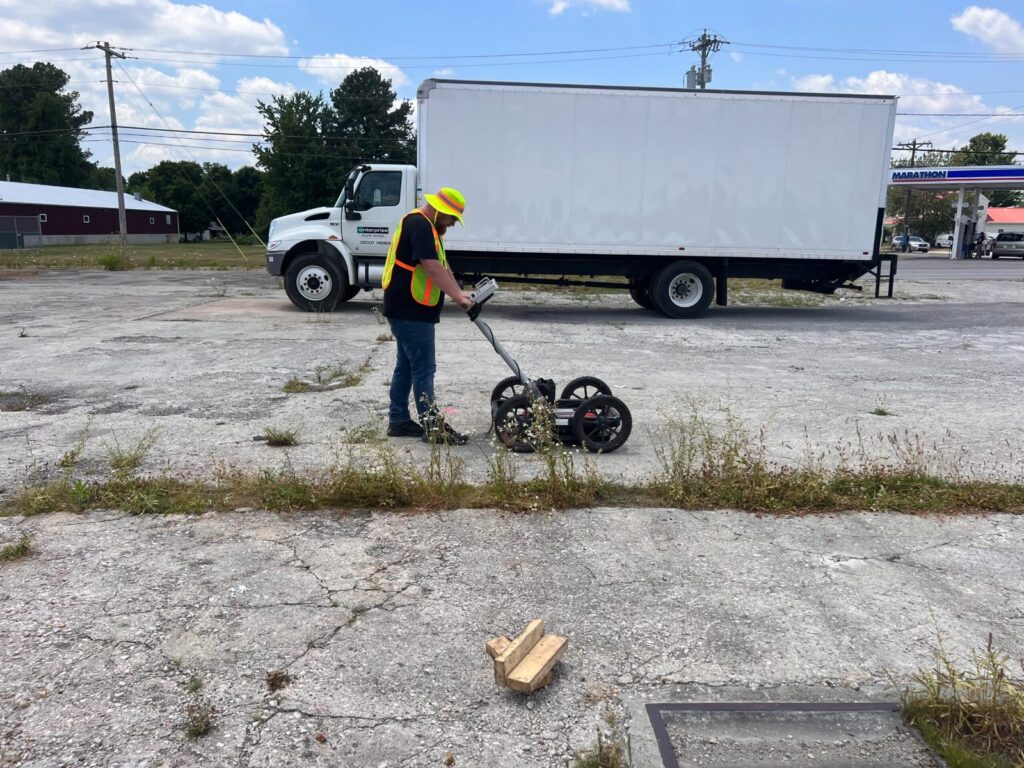
Ground penetrating radar (GPR) sends radio waves into the ground and records the reflections that come back from buried objects and changes in the soil. A trained technician reads those reflections on screen and marks what they find on the surface.
GPR doesn’t depend on a metal signal, so it can detect non-metallic lines such as PVC, clay, and concrete pipe, along with tanks and other buried features that electromagnetic (EM) locating can miss.
We use MALA and Noggin GPR systems, and we often combine GPR with EM locating, because no single method finds everything.
When GPR scanning makes sense
Plastic and concrete lines
PVC, clay, and concrete pipe carry no metal signal. GPR can often detect them when other methods can’t.
Septic tanks
When the lid is buried and nobody remembers where the tank is, GPR can help find it and estimate its depth.
Buried structures and objects
Old foundations, abandoned lines, and items left behind by a previous owner or builder.
Missing or unreliable records
When drawings and as-builts are missing or don’t match what’s in the ground.
Before you excavate
Scan the work area first so you know what’s there before the shovel or the excavator goes in.
Utility mapping and site work
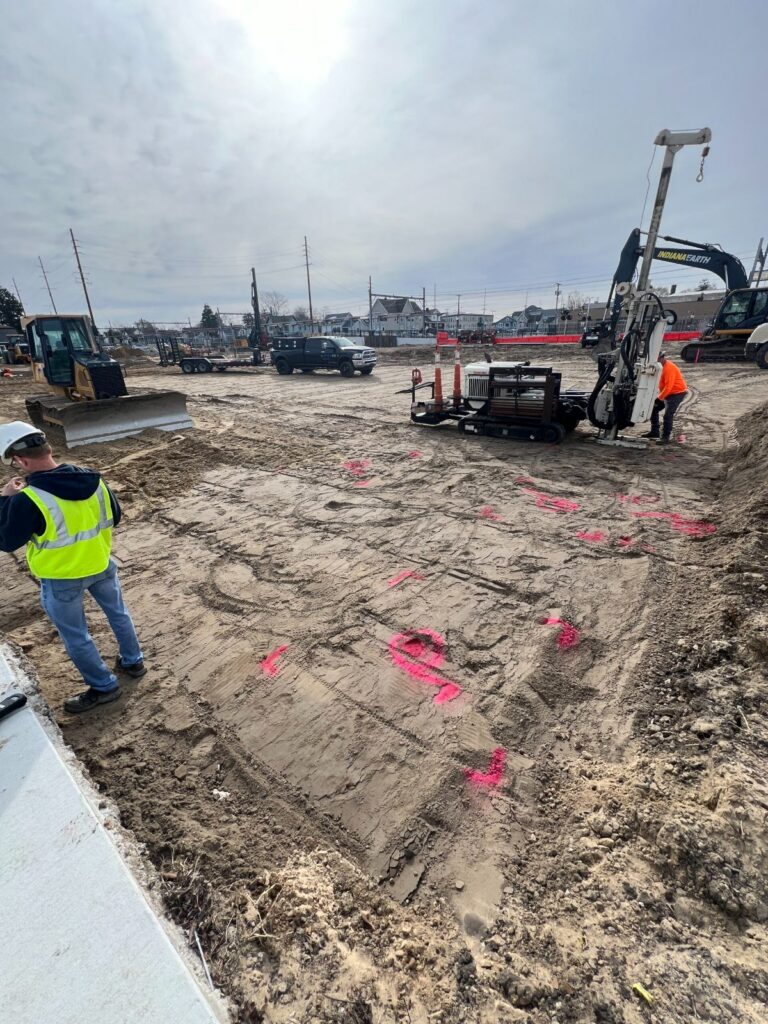
We can record located features with GNSS so your project team has them on a map.
How a GPR scan works
1. Walk the site
We talk through the job, what you need found, access, and surface conditions.
2. Scan the area
We push the GPR cart across the area in passes and watch the data as we go.
3. Mark what we find
We mark the surface with paint or flags, using the standard color for the type of line when we can identify it.
4. Review with you
We walk you through the marks and tell you what we could and couldn’t confirm.
Crews often combine GPR with EM locating and, for sewer lines, push cameras. The right mix depends on what’s buried and what the ground allows.
What GPR can do
- Detect non-metallic pipe, tanks, and other buried objects
- Show the approximate horizontal position of what it finds
- Give an estimated depth
- Work alongside EM locating to build a fuller picture
Limits you should know about
- Clay and wet, saturated soil limit how deep GPR can see
- GPR shows that something is there, but not always what it is
- Depth readings are estimates unless the line is exposed
- Rough or obstructed surfaces can reduce data quality
- A locate is not a boundary survey. Only a licensed surveyor can set property lines
Safety first
Call 811 first. Then call us.
A private locate does not replace 811. Before any digging, request your 811 locate so the public utilities are marked. We ask that your 811 marks be called in before we arrive, so we can see the full picture on site.
When you dig, follow your state’s rules for working near marked lines, treat every line as live, and never dig on a guess.
Family-owned, and careful with the details
American Locating Services was founded in 2000 by Jeff Clem, who still owns the company and has more than 30 years in the industry. We’re a family-owned business, not a corporation, and we take the time to get the details right.
We quote a flat rate based on the scope of the job, and we schedule by appointment so every locate gets the attention it needs.
Common questions
What is GPR scanning?
GPR scanning uses radio waves to detect objects and changes below the surface. A technician reads the reflections and marks what they find on the ground.
Can GPR find PVC and other plastic pipe?
Often, yes. GPR doesn’t need a metal signal, so it can detect non-metallic pipe. Results depend on soil, moisture, pipe size, and depth, so we can’t promise that every line will be found.
How deep can GPR see?
It depends mostly on the soil. Dry, sandy soil allows deeper readings, while clay and saturated ground limit depth. We’ll tell you on site what we’re seeing and what the conditions allow.
Do I need GPR or EM locating?
Often both. EM locating works best on metal pipes, cables, and lines with tracer wire. GPR helps find non-metallic lines and other buried features. We choose the method, or combination, that fits your site.
How much does GPR scanning cost?
We quote a flat rate for each job based on its scope, such as the size of the area, the number of targets, and site access. Send us the address and details and we’ll quote it.
Do I still need to call 811?
Yes. GPR scanning complements 811. It doesn’t replace it. Please have your 811 marks called in before we arrive, and follow your state’s rules for digging near marked lines.
Ready to schedule a GPR scan?
Tell us about your project and we’ll send a flat-rate quote. We schedule by appointment, so give us as much notice as you can.
Related services: Private utility locating · Sewer and water line locating · Surveying, mapping and drone · All services
We’re not an emergency response service. If you smell gas or have struck a line, leave the area and call 911 and your utility’s emergency number.