
Our services
Septic Tank Locating
Can’t find your septic tank? We use ground penetrating radar and electromagnetic locating to find buried tanks and mark their approximate location, so you can plan service, repairs, or digging around them. Family-owned and based in Indianapolis, we serve Indiana, Ohio, Michigan, Kentucky, and the greater Midwest.
Family-owned
GPR and EM locating
Flat-rate quotes
Scheduled by appointment
Finding a buried septic tank
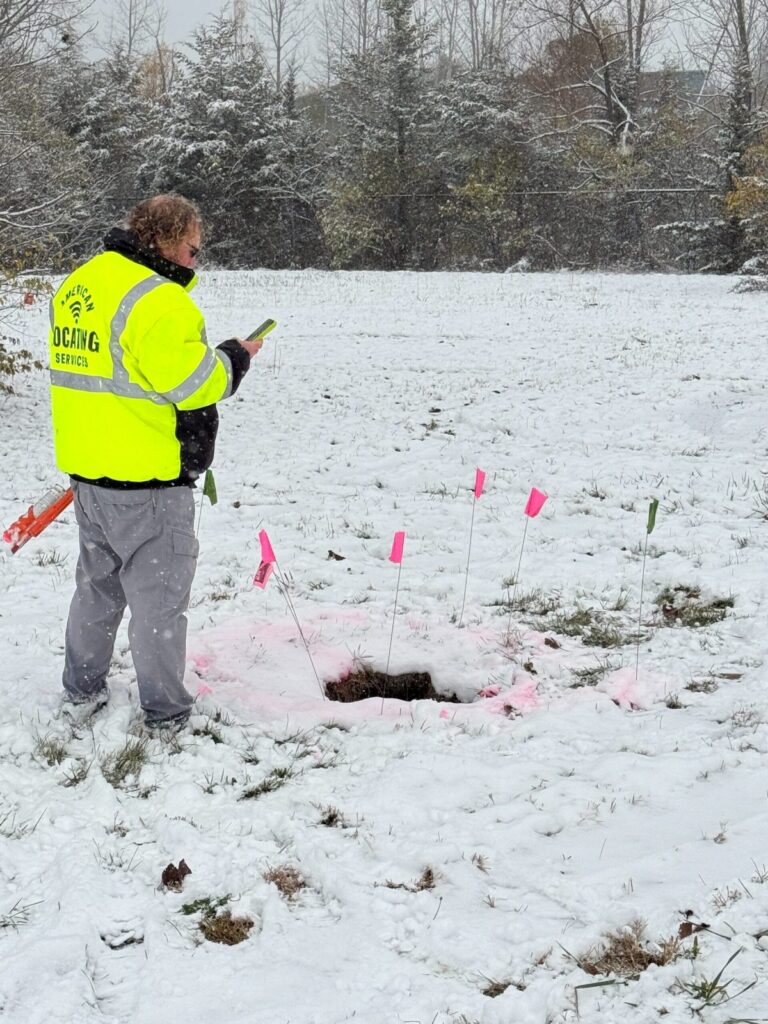
Septic tank lids are often buried under soil, sod, or landscaping, and old records can be missing or wrong. We scan the likely area with GPR and EM locating, mark the tank’s approximate position, and give you an estimate of its depth.
Then you, your septic service company, or your contractor know where to work, and where not to.
When people call us
Before a pump-out or inspection
The service company needs to know where the tank is. We mark it so they can get right to work.
New to the property
You bought the house and nobody can say where the system is.
Before you dig or landscape
Find the tank before a shovel, auger, or machine does.
Pools, decks, and additions
Know what’s buried where you want to build.
Before repairs
Locate the tank first so repairs start in the right place.
Missing records
The permit file is gone, or the sketch doesn’t match what’s in the yard.
How it works
1. Tell us about the property
Send the address, the age of the home, and any sketch or permit records you have.
2. We scan the likely area
We use GPR and EM locating to look for the tank and the lines that lead to it.
3. We mark it
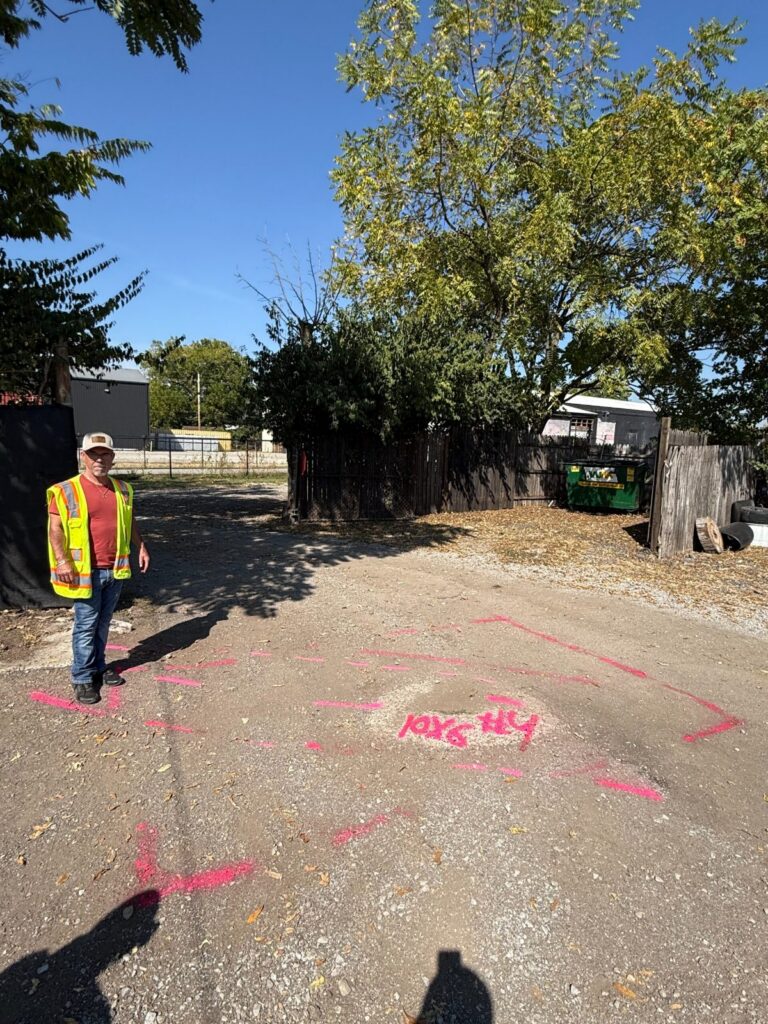
We mark the tank’s approximate position and note its estimated depth.
4. We walk you through it
We explain what we found and what we couldn’t confirm.
What we can do
- Find the approximate location of a buried septic tank
- Estimate how deep the tank sits
- Mark it so service professionals can find it quickly
Limits you should know about
- Not every tank can be found. Depth, soil, moisture, and nearby objects all affect results
- Depth readings are estimates unless the tank is exposed
- This service is tank locating, not a septic inspection or a pump-out
- A locate is not a boundary survey. Only a licensed surveyor can set property lines
Safety first
Call 811 first. Then call us.
A private locate does not replace 811. Before any digging, request your 811 locate so the public utilities are marked. We ask that your 811 marks be called in before we arrive, so we can see the full picture on site.
When you dig, follow your state’s rules for working near marked lines, treat every line as live, and never dig on a guess.
Septic tanks can hold dangerous gases, and lids can give way. Never open a tank lid or stand on one. Leave tank access to a qualified septic professional.
Family-owned, and careful with the details
American Locating Services was founded in 2000 by Jeff Clem, who still owns the company and has more than 30 years in the industry. We’re a family-owned business, not a corporation, and we take the time to get the details right.
We quote a flat rate based on the scope of the job, and we schedule by appointment so every locate gets the attention it needs.
Common questions
How do you find a septic tank?
We scan the likely area with GPR and EM locating and look for the tank and the lines that lead to it. When we find it, we mark its approximate position on the surface.
Can every septic tank be found?
No. Results depend on the soil, moisture, depth, and what’s around the tank. We’ll tell you on site what we found and what we couldn’t confirm.
Do I still need to call 811?
Yes. Septic tank locating doesn’t replace 811. Call 811 before any digging, and please have your 811 marks called in before we arrive.
Do you pump or inspect septic tanks?
No. We find and mark the tank. Pumping, inspection, and repair are done by qualified septic professionals.
How much does it cost?
We quote a flat rate for each job based on its scope. Send us the address and what you’re trying to do and we’ll quote it.
How soon can you come?
We typically schedule ahead of time rather than same day. Tell us your timeline when you request a quote and we’ll work out the earliest appointment.
Need your septic tank located?
Tell us about your property and we’ll send a flat-rate quote. We schedule by appointment, so give us as much notice as you can.
Related services: Private utility locating · GPR scanning · Sewer and water line locating · All services
We’re not an emergency response service. If you smell gas or have struck a line, leave the area and call 911 and your utility’s emergency number.