Our services
Private Utility Locating Services
Family-owned and based in Indianapolis, we find and mark the underground lines on private property that 811 doesn’t, and we record and map what we find. We serve Indiana, Ohio, Michigan, Kentucky, and the greater Midwest.
Family-owned
Flat-rate quotes
Scheduled by appointment
Call 811 first
One company for the whole job
Every job starts with the same question: what is under the ground, and where? Depending on your site, we combine electromagnetic (EM) locating, ground penetrating radar (GPR), push cameras, and GNSS to answer it. Choose a service below, or send us your address and what you plan to dig and we’ll recommend the right approach.
01
Private utility locating
We find and mark private water, sewer, gas, electric, and communication lines, the lines 811 doesn’t mark. Used before fences, pools, patios, trenching, and other excavation on private property.
02
GPR scanning
Ground penetrating radar can detect non-metallic lines such as PVC and clay pipe, as well as tanks and other buried features that electromagnetic locating can miss.
03
Sewer and water line locating
We trace sewer laterals and water service lines so you can plan around them, using EM locators and push cameras depending on the pipe material and access.
04
Utility and monitoring well surveying
We collect XYZ coordinates for located utilities and monitoring wells, including elevation on wells, using centimeter-grade GNSS. We don’t perform boundary, topographic, or other land surveys.
05
Utility and aerial mapping
Located lines recorded and delivered as maps for your plans. Aerial mapping is flown by an FAA Part 107 certified remote pilot.
06
UST searches
We search for underground storage tanks (USTs) before excavation, redevelopment, or environmental work, using GPR and EM locating.
07
Camera inspection
Push cameras let us look inside drain and sewer lines to inspect them and trace their path.
08
Geophysical surveys
GPR and EM site surveys for projects that need a broader picture of what is below the surface than a single line locate.
09
Septic tank locating
We locate septic tanks and septic components before you dig, build, or schedule service. Results depend on soil and site conditions.
The right tool for what’s underground
No single method finds everything, so we often combine them.
EM locators
Detect conductive lines such as metal pipe and cable.
Ground penetrating radar
MALA and Noggin systems detect non-metallic lines, tanks, and other buried features.
Push cameras
Inspect and trace drain and sewer lines from the inside.
GNSS
Record the position of marks and monitoring wells with centimeter-grade GNSS.
Out in the field
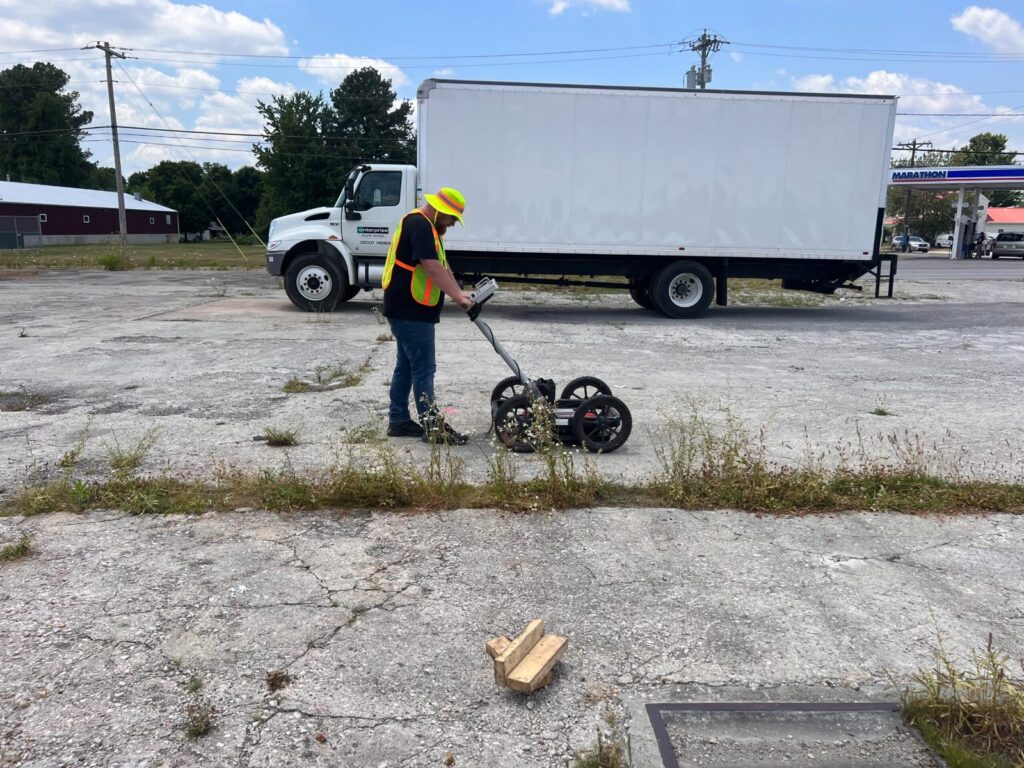
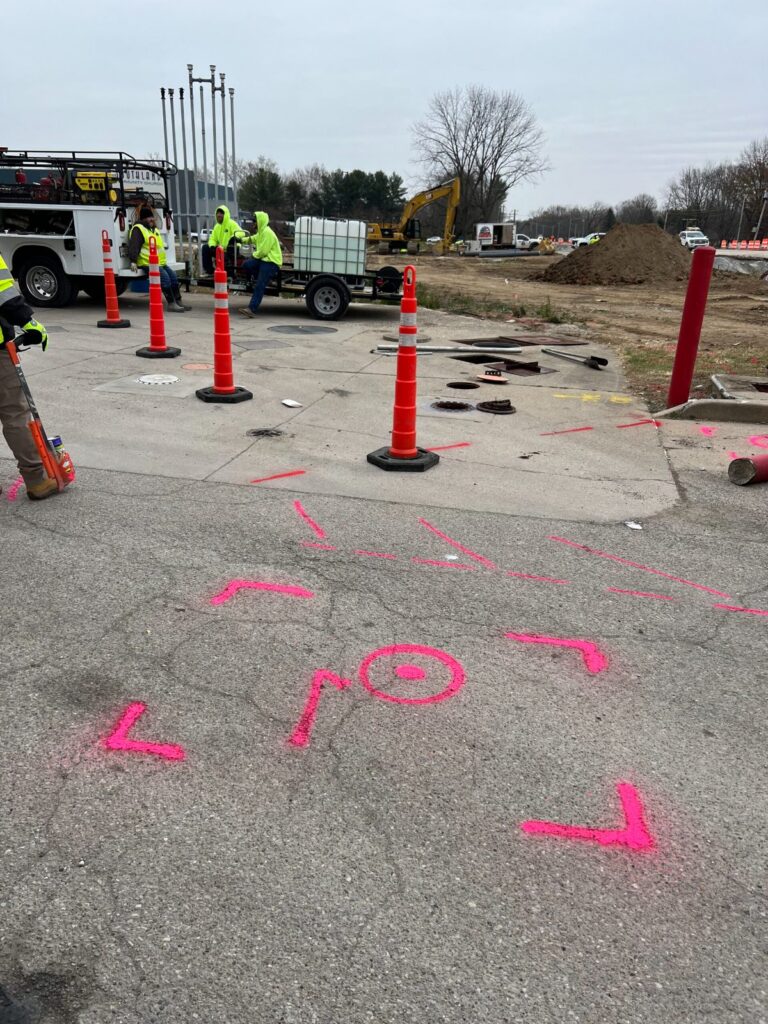
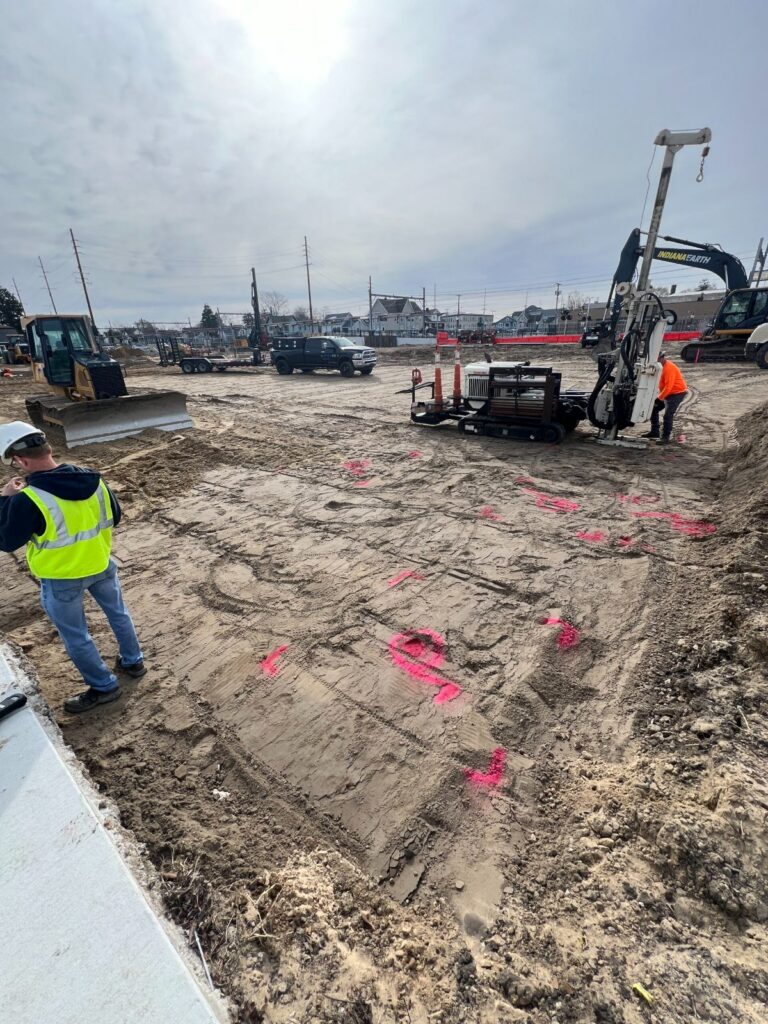
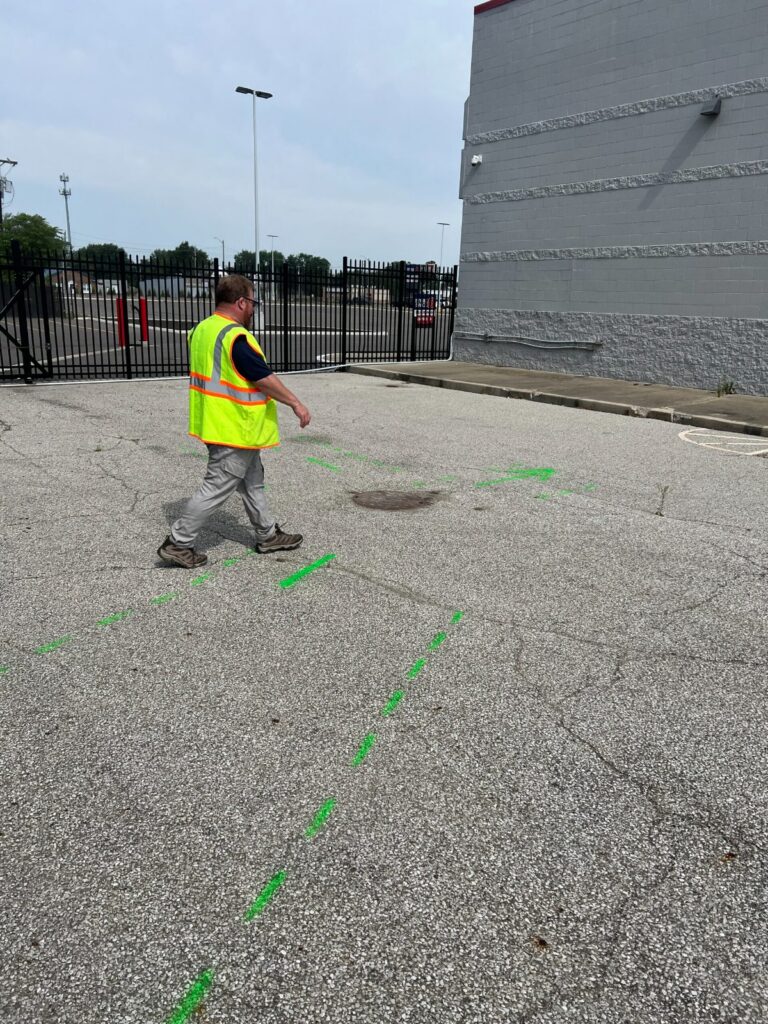
A look at our crew at work.
Who we work with
Our crews work for property owners, contractors, and project teams of all sizes.
Homeowners
Before a fence, deck, pool, patio, shed, or tree removal.
Contractors
Fence, concrete, landscape, plumbing, electrical, HVAC, and solar crews.
Commercial and industrial
Facilities, campuses, and expansion projects.
Municipal
Public works and local governments.
Engineering and SUE firms
Utility investigation support for subsurface utility engineering (SUE), design, and bid work.
Environmental companies
Utility clearance, tank searches, and monitoring well locations and elevations for site work.
Safety first
Call 811 first. Then call us.
A private locate does not replace 811. Before any digging, request your 811 locate so the public utilities are marked. We ask that your 811 marks be called in before we arrive, so we can see the full picture on site.
When you dig, follow your state’s rules for working near marked lines, treat every line as live, and never dig on a guess.
Common questions
Does 811 mark private lines?
No. 811 notifies public utility owners, who mark their own lines. Lines you own, such as water and sewer service lines, irrigation, and gas lines to a pool or grill, are typically not marked. That’s where private locating comes in.
If I hire you, do I still need to call 811?
Yes. Private locating complements 811. It doesn’t replace it. Please have your 811 marks called in before we arrive.
How much does a locate cost?
We quote a flat rate based on the scope of the job. Send us the address, the type of work, and your timeline, and we’ll quote it.
How do I schedule a locate?
We schedule locates by appointment, so call or text us as soon as you know your dig date.
How accurate is a locate?
Locating means interpreting signals, so results depend on soil type, moisture, depth, access, and nearby interference. Clay and saturated soil can limit GPR. Our marks show the approximate horizontal position of a line, and depth readings are estimates unless the line is exposed by hand-digging or vacuum excavation. A utility locate is not a property boundary survey.
Do you offer emergency service?
No. We’re not an emergency response service. If you smell gas, see a damaged line, or have just struck a utility, leave the area and call 911 and your utility’s emergency number.
Not sure which service you need?
Tell us about your job and we’ll recommend the right approach and send a flat-rate quote based on the scope of the work. We schedule locates by appointment, so the more notice you can give us, the better. Please have your 811 marks called in before we arrive.
We’re not an emergency response service. If you smell gas or have struck a line, leave the area and call 911 and your utility’s emergency number.